
Decoding the Puzzle Box: How Intricate Artifacts Drive Dark Speculative Lore

The Irresistible Click of Doomed Curiosity

Every forbidden mechanism begins with an invitation. A latch waits beneath the thumb, a hidden panel catches the light, or a sequence of interlocking pieces promises to yield if only the correct pressure is applied. The impulse is older than any named mythology: touch the object, rotate it, test its resistance, discover what intelligence has concealed. A puzzle box does not merely sit in a room. It addresses the hands directly, creating the sensation that the answer already belongs to the person willing to pursue it. That is why an artifact such as the deadly Japanese puzzle box carries a particular charge in speculative fiction. Its danger is not distant. It waits beneath the fingertips.

Amorphous curses and remote cosmic entities can inspire awe, but they often preserve a degree of separation. The protagonist may hear a name, read a prophecy, or glimpse an impossible shape without physically participating in its arrival. An intricate artifact removes that protective distance. It transforms forbidden knowledge into a task, then turns success into trespass. The mind expects intellectual victory to produce mastery, yet dark fiction reverses the reward. The final click does not solve the mystery. It confirms that the solver has opened a threshold, accepted an invitation, or completed a ritual whose consequences were concealed inside the design.

Tactile Agency and the Illusion of Control

Mechanical interaction generates dread because it gives the character an apparent role in the supernatural event. Spoken incantations can feel theatrical, especially when their effects depend on ancient languages or inherited authority. A mechanism feels more democratic and therefore more dangerous. Anyone can turn a key. Anyone can align symbols. Anyone can convince themselves that the object is only a clever construction and that the person controlling the sequence remains in command.

This is the central psychological passage of mechanical horror. The protagonist begins as a problem-solver, examining tolerances, patterns, hinges, and concealed compartments. Each successful adjustment supplies evidence that the artifact obeys reason. Then the object responds in a way that reason cannot contain. A seam exhales warmth. A gear moves against the direction of force. A familiar symbol appears where no marking existed before. The solver becomes an unwitting summoner, not because intelligence failed, but because intelligence succeeded within rules designed by an inhuman intelligence.

The strongest designs make the transition sensory before it becomes explanatory. Horror arrives through the body, through small violations of ordinary material behavior. Brass seams scrape like teeth. A spring trembles after the hand has withdrawn. Gear friction produces a wet undertone beneath the expected metallic rasp. The artifact may be cold at its edges but warm in the central cavity, or heavy in one hand and strangely weightless in the other. These contradictions teach the audience that the object is not merely enchanted. It is actively negotiating with perception.

  • Resistance makes every movement feel like a negotiation rather than a simple command.
  • Repetition establishes a trustworthy pattern before one movement breaks it.
  • Sound gives invisible consequences a physical presence through clicks, grinding, and sudden silence.
  • False completion rewards the solver with an intermediate revelation while concealing the true threshold.

Interactive horror games refine this illusion by making the player perform the same reasoning as the character. A button press is not merely a command to an avatar. It becomes a small act of complicity. The player chooses to continue turning, opening, or combining, even while the fiction has made the danger obvious. This is why environmental problem-solving can be more disturbing than a cutscene. The hand on the controller repeats the hand on the fictional mechanism, binding audience agency to the protagonist’s mistake.

Anatomy of Legendary Horror Relics

The Lament Configuration remains the defining example of a horror relic whose physical design carries an entire metaphysics. In the Hellraiser mythology, the puzzle box is not simply a container for a monster. It is a contract disguised as craftsmanship, an object associated with desire, secret knowledge, and the opening of a passage to the Cenobites. Its geometric elegance matters because it makes damnation look curated. The box suggests that torment is not random punishment. It is the consequence of seeking an experience beyond ordinary human limits.
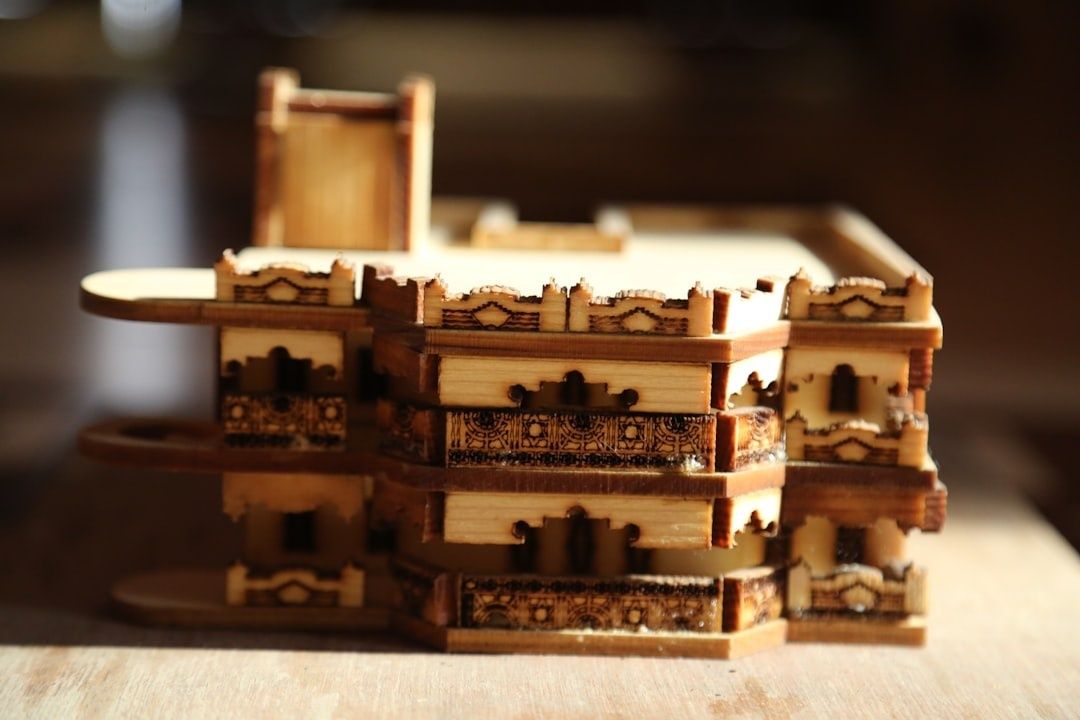
Intricately carved wooden mechanical puzzle box with layered sections
The most unsettling relics make curiosity feel like consent, turning a carefully solved mechanism into a threshold the solver cannot safely close.

Other horror artifacts use related structures while changing the narrative emphasis. A survival horror key may open a sealed wing, reveal a family crime, or expose the architecture of an infected institution. A cursed device in speculative fiction may store consciousness, manipulate time, or allow access to a buried social history. Each object anchors an abstract theme in material procedure. The artifact becomes a bridge between lore and action, allowing a myth about grief, addiction, technological arrogance, or forbidden desire to acquire weight in the reader’s or player’s hands.

Artifact type Mechanical behavior Narrative purpose Psychological stake
Lament Configuration Interlocking transformations and hidden configurations Opens a supernatural threshold and summons Cenobite judgment Desire becomes consent to an unknowable form of transcendence
Survival horror puzzle key Combines symbols, locks, emblems, or environmental clues Connects exploration with buried history and progression Curiosity competes with immediate vulnerability
Forbidden memory device Activates through selected objects, images, or personal associations Turns grief and identity into speculative mechanics Emotional recovery becomes a form of dangerous dependence
Eldritch machine Requires calibration, sacrifice, or precise sequencing Translates cosmic forces into human engineering Control becomes indistinguishable from surrender

Physical craftsmanship grounds surreal mythology in reality because crafted objects imply a maker, a process, and an intention. Even when the creator is unknown, the artifact appears to have passed through hands, workshops, rituals, or civilizations. The viewer can imagine its construction, which makes its impossible function more disturbing. The box could be held. The key could be stolen. The mechanism could be repaired. That practical possibility allows the supernatural to enter the domestic world without announcing itself as a miracle.

The Evolution from Static MacGuffins to Active Antagonists

Older narrative structures often treated the relic as a static MacGuffin, an object whose main function was to motivate pursuit. Modern horror increasingly gives the artifact behavior, appetite, and resistance. It may rearrange a building, alter the memories of its handler, attract enemies, or respond differently according to the user’s motives. The inanimate object becomes an antagonist without developing a human face. Its hostility emerges through timing, obstruction, and the cruel precision of its responses.

Contemporary horror games demonstrate how environmental puzzles can serve as pacing mechanisms rather than pauses between encounters. In the previewed structure of Resident Evil Requiem, Grace’s sections emphasize observation, stealth, and vulnerability, with environmental problems unfolding while hostile figures patrol nearby. The puzzle is therefore never isolated from danger. A door may require several steps to unlock, but every step consumes attention while a butcher, stalker, or altered patient may be changing position beyond the player’s view. The mechanism becomes a clock without displaying numbers.

This produces a crucial shift from passive curiosity to desperate mechanical triage. At first, the character studies the artifact for meaning. Later, the same object must be manipulated with shaking hands while pursuit closes in, routes collapse, or the surrounding space becomes biologically unstable. Precision remains necessary, but contemplation becomes a luxury. The horror lies in having to perform an elegant sequence under conditions that punish hesitation and reward reckless contact.

  • Stage one presents the artifact as an intriguing object with readable rules.
  • Stage two introduces environmental consequences that make experimentation costly.
  • Stage three links the mechanism to pursuit, confinement, or bodily threat.
  • Stage four forces the protagonist to choose between completing the sequence and abandoning the only apparent route to safety.

The result is a form of narrative pressure in which the artifact controls the rhythm of fear. It can provide a moment of quiet concentration, then interrupt that concentration with a new movement, a changed symbol, or an impossible answer. In dark fantasy, the object may even become an instrument of moral exposure. It reveals what the protagonist is willing to sacrifice for access, survival, revenge, or knowledge. The machine does not need to speak because each decision made around it becomes testimony.

Crafting Artifacts That Linger in the Mind

An enduring eldritch relic requires more than ornate surfaces. Its visual balance must suggest a coherent intelligence, while its sensory weight must make the object feel capable of injuring, staining, or transforming the world around it. The best designs are beautiful enough to invite attention and wrong enough to punish that attention. Artists working in horror often use surreal distortion to make an ordinary reality express a larger idea. Daniel Sherekin’s discussion of horror art in Nightmare Magazine similarly emphasizes the genre’s ability to communicate profound concepts through shocking and entertaining forms.

Symbolic resonance gives the mechanism a second life after the immediate scare. A box built around concentric frames may represent obsession and enclosure. A key that reshapes itself may embody unstable identity. A device requiring several hands may turn intimacy into a threat, while a puzzle that can be solved only by destroying part of itself suggests that knowledge consumes its own vessel. Mathematical elegance should not decorate the horror from a safe distance. It should govern the consequence, linking every satisfying pattern to a bodily, emotional, or metaphysical cost.

  1. Begin with the forbidden desire. Decide what the artifact promises, such as transcendence, reunion, escape, forbidden pleasure, or perfect knowledge.
  2. Give the mechanism a legible grammar. Repeated rotations, mirrored symbols, and escalating locks let the audience understand enough to anticipate danger.
  3. Introduce one impossible behavior. A single violation of material logic is often more unsettling than constant spectacle.
  4. Connect operation to consequence. Each movement should alter the body, the environment, the memory of the user, or the moral structure of the story.
  5. Preserve an unanswered center. The artifact should reveal its function without fully explaining its maker, origin, or ultimate purpose.

The final principle is restraint. If every surface pulses and every compartment contains a creature, the relic becomes visual noise. A quiet object with one hairline seam can carry more menace than a cathedral of machinery. Let the audience imagine the interior. Let the solver hear a mechanism complete a sequence in darkness. Let the consequence arrive slightly later, after the character has convinced themselves that the operation worked. Dread survives in the interval between action and understanding.

Opening Doors That Never Truly Close

Mechanical artifacts remain the ultimate catalysts for dark wonder because they unite three impulses that horror rarely allows to coexist: curiosity, competence, and guilt. The protagonist is not merely attacked by an external curse. The protagonist approaches, tests, interprets, and completes. Even when the artifact was planted as a trap, the trap succeeds through participation. The threshold opens because a human hand, human desire, or human desperation supplies the final movement.

That structure explains the enduring power of the puzzle box across Hellraiser lore, survival horror, dark fantasy, and speculative fiction. At the center waits a terrible reward, perhaps revelation, transformation, communion, or pain refined into a new form of knowledge. The object promises that the universe contains a hidden order and that patient hands can uncover it. The warning is equally clear: some designs are not meant to be solved by human minds. Once the final click answers the question, the door may open onto an experience that cannot be folded back into the box. The mechanism closes behind the solver, but the threshold never truly does.


Decoding the Puzzle Box: How Intricate Artifacts Drive Dark Speculative Lore

The Irresistible Click of Doomed Curiosity

Every forbidden mechanism begins with an invitation. A latch waits beneath the thumb, a hidden panel catches the light, or a sequence of interlocking pieces promises to yield if only the correct pressure is applied. The impulse is older than any named mythology: touch the object, rotate it, test its resistance, discover what intelligence has concealed. A puzzle box does not merely sit in a room. It addresses the hands directly, creating the sensation that the answer already belongs to the person willing to pursue it. That is why an artifact such as the deadly Japanese puzzle box carries a particular charge in speculative fiction. Its danger is not distant. It waits beneath the fingertips.

Amorphous curses and remote cosmic entities can inspire awe, but they often preserve a degree of separation. The protagonist may hear a name, read a prophecy, or glimpse an impossible shape without physically participating in its arrival. An intricate artifact removes that protective distance. It transforms forbidden knowledge into a task, then turns success into trespass. The mind expects intellectual victory to produce mastery, yet dark fiction reverses the reward. The final click does not solve the mystery. It confirms that the solver has opened a threshold, accepted an invitation, or completed a ritual whose consequences were concealed inside the design.

Tactile Agency and the Illusion of Control

Mechanical interaction generates dread because it gives the character an apparent role in the supernatural event. Spoken incantations can feel theatrical, especially when their effects depend on ancient languages or inherited authority. A mechanism feels more democratic and therefore more dangerous. Anyone can turn a key. Anyone can align symbols. Anyone can convince themselves that the object is only a clever construction and that the person controlling the sequence remains in command.

This is the central psychological passage of mechanical horror. The protagonist begins as a problem-solver, examining tolerances, patterns, hinges, and concealed compartments. Each successful adjustment supplies evidence that the artifact obeys reason. Then the object responds in a way that reason cannot contain. A seam exhales warmth. A gear moves against the direction of force. A familiar symbol appears where no marking existed before. The solver becomes an unwitting summoner, not because intelligence failed, but because intelligence succeeded within rules designed by an inhuman intelligence.

The strongest designs make the transition sensory before it becomes explanatory. Horror arrives through the body, through small violations of ordinary material behavior. Brass seams scrape like teeth. A spring trembles after the hand has withdrawn. Gear friction produces a wet undertone beneath the expected metallic rasp. The artifact may be cold at its edges but warm in the central cavity, or heavy in one hand and strangely weightless in the other. These contradictions teach the audience that the object is not merely enchanted. It is actively negotiating with perception.

  • Resistance makes every movement feel like a negotiation rather than a simple command.
  • Repetition establishes a trustworthy pattern before one movement breaks it.
  • Sound gives invisible consequences a physical presence through clicks, grinding, and sudden silence.
  • False completion rewards the solver with an intermediate revelation while concealing the true threshold.

Interactive horror games refine this illusion by making the player perform the same reasoning as the character. A button press is not merely a command to an avatar. It becomes a small act of complicity. The player chooses to continue turning, opening, or combining, even while the fiction has made the danger obvious. This is why environmental problem-solving can be more disturbing than a cutscene. The hand on the controller repeats the hand on the fictional mechanism, binding audience agency to the protagonist’s mistake.

Anatomy of Legendary Horror Relics

The Lament Configuration remains the defining example of a horror relic whose physical design carries an entire metaphysics. In the Hellraiser mythology, the puzzle box is not simply a container for a monster. It is a contract disguised as craftsmanship, an object associated with desire, secret knowledge, and the opening of a passage to the Cenobites. Its geometric elegance matters because it makes damnation look curated. The box suggests that torment is not random punishment. It is the consequence of seeking an experience beyond ordinary human limits.

Intricately carved wooden mechanical puzzle box with layered sections
The most unsettling relics make curiosity feel like consent, turning a carefully solved mechanism into a threshold the solver cannot safely close.

Other horror artifacts use related structures while changing the narrative emphasis. A survival horror key may open a sealed wing, reveal a family crime, or expose the architecture of an infected institution. A cursed device in speculative fiction may store consciousness, manipulate time, or allow access to a buried social history. Each object anchors an abstract theme in material procedure. The artifact becomes a bridge between lore and action, allowing a myth about grief, addiction, technological arrogance, or forbidden desire to acquire weight in the reader’s or player’s hands.

Artifact type Mechanical behavior Narrative purpose Psychological stake
Lament Configuration Interlocking transformations and hidden configurations Opens a supernatural threshold and summons Cenobite judgment Desire becomes consent to an unknowable form of transcendence
Survival horror puzzle key Combines symbols, locks, emblems, or environmental clues Connects exploration with buried history and progression Curiosity competes with immediate vulnerability
Forbidden memory device Activates through selected objects, images, or personal associations Turns grief and identity into speculative mechanics Emotional recovery becomes a form of dangerous dependence
Eldritch machine Requires calibration, sacrifice, or precise sequencing Translates cosmic forces into human engineering Control becomes indistinguishable from surrender

Physical craftsmanship grounds surreal mythology in reality because crafted objects imply a maker, a process, and an intention. Even when the creator is unknown, the artifact appears to have passed through hands, workshops, rituals, or civilizations. The viewer can imagine its construction, which makes its impossible function more disturbing. The box could be held. The key could be stolen. The mechanism could be repaired. That practical possibility allows the supernatural to enter the domestic world without announcing itself as a miracle.

The Evolution from Static MacGuffins to Active Antagonists

Older narrative structures often treated the relic as a static MacGuffin, an object whose main function was to motivate pursuit. Modern horror increasingly gives the artifact behavior, appetite, and resistance. It may rearrange a building, alter the memories of its handler, attract enemies, or respond differently according to the user’s motives. The inanimate object becomes an antagonist without developing a human face. Its hostility emerges through timing, obstruction, and the cruel precision of its responses.

Contemporary horror games demonstrate how environmental puzzles can serve as pacing mechanisms rather than pauses between encounters. In the previewed structure of Resident Evil Requiem, Grace’s sections emphasize observation, stealth, and vulnerability, with environmental problems unfolding while hostile figures patrol nearby. The puzzle is therefore never isolated from danger. A door may require several steps to unlock, but every step consumes attention while a butcher, stalker, or altered patient may be changing position beyond the player’s view. The mechanism becomes a clock without displaying numbers.

This produces a crucial shift from passive curiosity to desperate mechanical triage. At first, the character studies the artifact for meaning. Later, the same object must be manipulated with shaking hands while pursuit closes in, routes collapse, or the surrounding space becomes biologically unstable. Precision remains necessary, but contemplation becomes a luxury. The horror lies in having to perform an elegant sequence under conditions that punish hesitation and reward reckless contact.

  • Stage one presents the artifact as an intriguing object with readable rules.
  • Stage two introduces environmental consequences that make experimentation costly.
  • Stage three links the mechanism to pursuit, confinement, or bodily threat.
  • Stage four forces the protagonist to choose between completing the sequence and abandoning the only apparent route to safety.

The result is a form of narrative pressure in which the artifact controls the rhythm of fear. It can provide a moment of quiet concentration, then interrupt that concentration with a new movement, a changed symbol, or an impossible answer. In dark fantasy, the object may even become an instrument of moral exposure. It reveals what the protagonist is willing to sacrifice for access, survival, revenge, or knowledge. The machine does not need to speak because each decision made around it becomes testimony.

Crafting Artifacts That Linger in the Mind

An enduring eldritch relic requires more than ornate surfaces. Its visual balance must suggest a coherent intelligence, while its sensory weight must make the object feel capable of injuring, staining, or transforming the world around it. The best designs are beautiful enough to invite attention and wrong enough to punish that attention. Artists working in horror often use surreal distortion to make an ordinary reality express a larger idea. Daniel Sherekin’s discussion of horror art in Nightmare Magazine similarly emphasizes the genre’s ability to communicate profound concepts through shocking and entertaining forms.

Symbolic resonance gives the mechanism a second life after the immediate scare. A box built around concentric frames may represent obsession and enclosure. A key that reshapes itself may embody unstable identity. A device requiring several hands may turn intimacy into a threat, while a puzzle that can be solved only by destroying part of itself suggests that knowledge consumes its own vessel. Mathematical elegance should not decorate the horror from a safe distance. It should govern the consequence, linking every satisfying pattern to a bodily, emotional, or metaphysical cost.

  1. Begin with the forbidden desire. Decide what the artifact promises, such as transcendence, reunion, escape, forbidden pleasure, or perfect knowledge.
  2. Give the mechanism a legible grammar. Repeated rotations, mirrored symbols, and escalating locks let the audience understand enough to anticipate danger.
  3. Introduce one impossible behavior. A single violation of material logic is often more unsettling than constant spectacle.
  4. Connect operation to consequence. Each movement should alter the body, the environment, the memory of the user, or the moral structure of the story.
  5. Preserve an unanswered center. The artifact should reveal its function without fully explaining its maker, origin, or ultimate purpose.

The final principle is restraint. If every surface pulses and every compartment contains a creature, the relic becomes visual noise. A quiet object with one hairline seam can carry more menace than a cathedral of machinery. Let the audience imagine the interior. Let the solver hear a mechanism complete a sequence in darkness. Let the consequence arrive slightly later, after the character has convinced themselves that the operation worked. Dread survives in the interval between action and understanding.

Opening Doors That Never Truly Close

Mechanical artifacts remain the ultimate catalysts for dark wonder because they unite three impulses that horror rarely allows to coexist: curiosity, competence, and guilt. The protagonist is not merely attacked by an external curse. The protagonist approaches, tests, interprets, and completes. Even when the artifact was planted as a trap, the trap succeeds through participation. The threshold opens because a human hand, human desire, or human desperation supplies the final movement.

That structure explains the enduring power of the puzzle box across Hellraiser lore, survival horror, dark fantasy, and speculative fiction. At the center waits a terrible reward, perhaps revelation, transformation, communion, or pain refined into a new form of knowledge. The object promises that the universe contains a hidden order and that patient hands can uncover it. The warning is equally clear: some designs are not meant to be solved by human minds. Once the final click answers the question, the door may open onto an experience that cannot be folded back into the box. The mechanism closes behind the solver, but the threshold never truly does.

Decoding the Puzzle Box: How Intricate Artifacts Drive Dark Speculative Lore

The Irresistible Click of Doomed Curiosity

Every forbidden mechanism begins with an invitation. A latch waits beneath the thumb, a hidden panel catches the light, or a sequence of interlocking pieces promises to yield if only the correct pressure is applied. The impulse is older than any named mythology: touch the object, rotate it, test its resistance, discover what intelligence has concealed. A puzzle box does not merely sit in a room. It addresses the hands directly, creating the sensation that the answer already belongs to the person willing to pursue it. That is why an artifact such as the deadly Japanese puzzle box carries a particular charge in speculative fiction. Its danger is not distant. It waits beneath the fingertips.

Amorphous curses and remote cosmic entities can inspire awe, but they often preserve a degree of separation. The protagonist may hear a name, read a prophecy, or glimpse an impossible shape without physically participating in its arrival. An intricate artifact removes that protective distance. It transforms forbidden knowledge into a task, then turns success into trespass. The mind expects intellectual victory to produce mastery, yet dark fiction reverses the reward. The final click does not solve the mystery. It confirms that the solver has opened a threshold, accepted an invitation, or completed a ritual whose consequences were concealed inside the design.

Tactile Agency and the Illusion of Control

Mechanical interaction generates dread because it gives the character an apparent role in the supernatural event. Spoken incantations can feel theatrical, especially when their effects depend on ancient languages or inherited authority. A mechanism feels more democratic and therefore more dangerous. Anyone can turn a key. Anyone can align symbols. Anyone can convince themselves that the object is only a clever construction and that the person controlling the sequence remains in command.

This is the central psychological passage of mechanical horror. The protagonist begins as a problem-solver, examining tolerances, patterns, hinges, and concealed compartments. Each successful adjustment supplies evidence that the artifact obeys reason. Then the object responds in a way that reason cannot contain. A seam exhales warmth. A gear moves against the direction of force. A familiar symbol appears where no marking existed before. The solver becomes an unwitting summoner, not because intelligence failed, but because intelligence succeeded within rules designed by an inhuman intelligence.

The strongest designs make the transition sensory before it becomes explanatory. Horror arrives through the body, through small violations of ordinary material behavior. Brass seams scrape like teeth. A spring trembles after the hand has withdrawn. Gear friction produces a wet undertone beneath the expected metallic rasp. The artifact may be cold at its edges but warm in the central cavity, or heavy in one hand and strangely weightless in the other. These contradictions teach the audience that the object is not merely enchanted. It is actively negotiating with perception.

  • Resistance makes every movement feel like a negotiation rather than a simple command.
  • Repetition establishes a trustworthy pattern before one movement breaks it.
  • Sound gives invisible consequences a physical presence through clicks, grinding, and sudden silence.
  • False completion rewards the solver with an intermediate revelation while concealing the true threshold.

Interactive horror games refine this illusion by making the player perform the same reasoning as the character. A button press is not merely a command to an avatar. It becomes a small act of complicity. The player chooses to continue turning, opening, or combining, even while the fiction has made the danger obvious. This is why environmental problem-solving can be more disturbing than a cutscene. The hand on the controller repeats the hand on the fictional mechanism, binding audience agency to the protagonist’s mistake.

Anatomy of Legendary Horror Relics

The Lament Configuration remains the defining example of a horror relic whose physical design carries an entire metaphysics. In the Hellraiser mythology, the puzzle box is not simply a container for a monster. It is a contract disguised as craftsmanship, an object associated with desire, secret knowledge, and the opening of a passage to the Cenobites. Its geometric elegance matters because it makes damnation look curated. The box suggests that torment is not random punishment. It is the consequence of seeking an experience beyond ordinary human limits.

Intricately carved wooden mechanical puzzle box with layered sections
The most unsettling relics make curiosity feel like consent, turning a carefully solved mechanism into a threshold the solver cannot safely close.

Other horror artifacts use related structures while changing the narrative emphasis. A survival horror key may open a sealed wing, reveal a family crime, or expose the architecture of an infected institution. A cursed device in speculative fiction may store consciousness, manipulate time, or allow access to a buried social history. Each object anchors an abstract theme in material procedure. The artifact becomes a bridge between lore and action, allowing a myth about grief, addiction, technological arrogance, or forbidden desire to acquire weight in the reader’s or player’s hands.

Artifact type Mechanical behavior Narrative purpose Psychological stake
Lament Configuration Interlocking transformations and hidden configurations Opens a supernatural threshold and summons Cenobite judgment Desire becomes consent to an unknowable form of transcendence
Survival horror puzzle key Combines symbols, locks, emblems, or environmental clues Connects exploration with buried history and progression Curiosity competes with immediate vulnerability
Forbidden memory device Activates through selected objects, images, or personal associations Turns grief and identity into speculative mechanics Emotional recovery becomes a form of dangerous dependence
Eldritch machine Requires calibration, sacrifice, or precise sequencing Translates cosmic forces into human engineering Control becomes indistinguishable from surrender

Physical craftsmanship grounds surreal mythology in reality because crafted objects imply a maker, a process, and an intention. Even when the creator is unknown, the artifact appears to have passed through hands, workshops, rituals, or civilizations. The viewer can imagine its construction, which makes its impossible function more disturbing. The box could be held. The key could be stolen. The mechanism could be repaired. That practical possibility allows the supernatural to enter the domestic world without announcing itself as a miracle.

The Evolution from Static MacGuffins to Active Antagonists

Older narrative structures often treated the relic as a static MacGuffin, an object whose main function was to motivate pursuit. Modern horror increasingly gives the artifact behavior, appetite, and resistance. It may rearrange a building, alter the memories of its handler, attract enemies, or respond differently according to the user’s motives. The inanimate object becomes an antagonist without developing a human face. Its hostility emerges through timing, obstruction, and the cruel precision of its responses.

Contemporary horror games demonstrate how environmental puzzles can serve as pacing mechanisms rather than pauses between encounters. In the previewed structure of Resident Evil Requiem, Grace’s sections emphasize observation, stealth, and vulnerability, with environmental problems unfolding while hostile figures patrol nearby. The puzzle is therefore never isolated from danger. A door may require several steps to unlock, but every step consumes attention while a butcher, stalker, or altered patient may be changing position beyond the player’s view. The mechanism becomes a clock without displaying numbers.

This produces a crucial shift from passive curiosity to desperate mechanical triage. At first, the character studies the artifact for meaning. Later, the same object must be manipulated with shaking hands while pursuit closes in, routes collapse, or the surrounding space becomes biologically unstable. Precision remains necessary, but contemplation becomes a luxury. The horror lies in having to perform an elegant sequence under conditions that punish hesitation and reward reckless contact.

  • Stage one presents the artifact as an intriguing object with readable rules.
  • Stage two introduces environmental consequences that make experimentation costly.
  • Stage three links the mechanism to pursuit, confinement, or bodily threat.
  • Stage four forces the protagonist to choose between completing the sequence and abandoning the only apparent route to safety.

The result is a form of narrative pressure in which the artifact controls the rhythm of fear. It can provide a moment of quiet concentration, then interrupt that concentration with a new movement, a changed symbol, or an impossible answer. In dark fantasy, the object may even become an instrument of moral exposure. It reveals what the protagonist is willing to sacrifice for access, survival, revenge, or knowledge. The machine does not need to speak because each decision made around it becomes testimony.

Crafting Artifacts That Linger in the Mind

An enduring eldritch relic requires more than ornate surfaces. Its visual balance must suggest a coherent intelligence, while its sensory weight must make the object feel capable of injuring, staining, or transforming the world around it. The best designs are beautiful enough to invite attention and wrong enough to punish that attention. Artists working in horror often use surreal distortion to make an ordinary reality express a larger idea. Daniel Sherekin’s discussion of horror art in Nightmare Magazine similarly emphasizes the genre’s ability to communicate profound concepts through shocking and entertaining forms.

Symbolic resonance gives the mechanism a second life after the immediate scare. A box built around concentric frames may represent obsession and enclosure. A key that reshapes itself may embody unstable identity. A device requiring several hands may turn intimacy into a threat, while a puzzle that can be solved only by destroying part of itself suggests that knowledge consumes its own vessel. Mathematical elegance should not decorate the horror from a safe distance. It should govern the consequence, linking every satisfying pattern to a bodily, emotional, or metaphysical cost.

  1. Begin with the forbidden desire. Decide what the artifact promises, such as transcendence, reunion, escape, forbidden pleasure, or perfect knowledge.
  2. Give the mechanism a legible grammar. Repeated rotations, mirrored symbols, and escalating locks let the audience understand enough to anticipate danger.
  3. Introduce one impossible behavior. A single violation of material logic is often more unsettling than constant spectacle.
  4. Connect operation to consequence. Each movement should alter the body, the environment, the memory of the user, or the moral structure of the story.
  5. Preserve an unanswered center. The artifact should reveal its function without fully explaining its maker, origin, or ultimate purpose.

The final principle is restraint. If every surface pulses and every compartment contains a creature, the relic becomes visual noise. A quiet object with one hairline seam can carry more menace than a cathedral of machinery. Let the audience imagine the interior. Let the solver hear a mechanism complete a sequence in darkness. Let the consequence arrive slightly later, after the character has convinced themselves that the operation worked. Dread survives in the interval between action and understanding.

Opening Doors That Never Truly Close

Mechanical artifacts remain the ultimate catalysts for dark wonder because they unite three impulses that horror rarely allows to coexist: curiosity, competence, and guilt. The protagonist is not merely attacked by an external curse. The protagonist approaches, tests, interprets, and completes. Even when the artifact was planted as a trap, the trap succeeds through participation. The threshold opens because a human hand, human desire, or human desperation supplies the final movement.

That structure explains the enduring power of the puzzle box across Hellraiser lore, survival horror, dark fantasy, and speculative fiction. At the center waits a terrible reward, perhaps revelation, transformation, communion, or pain refined into a new form of knowledge. The object promises that the universe contains a hidden order and that patient hands can uncover it. The warning is equally clear: some designs are not meant to be solved by human minds. Once the final click answers the question, the door may open onto an experience that cannot be folded back into the box. The mechanism closes behind the solver, but the threshold never truly does.

Decoding the Puzzle Box: How Intricate Artifacts Drive Dark Speculative Lore

The Irresistible Click of Doomed Curiosity

Every forbidden mechanism begins with an invitation. A latch waits beneath the thumb, a hidden panel catches the light, or a sequence of interlocking pieces promises to yield if only the correct pressure is applied. The impulse is older than any named mythology: touch the object, rotate it, test its resistance, discover what intelligence has concealed. A puzzle box does not merely sit in a room. It addresses the hands directly, creating the sensation that the answer already belongs to the person willing to pursue it. That is why an artifact such as the deadly Japanese puzzle box carries a particular charge in speculative fiction. Its danger is not distant. It waits beneath the fingertips.

Amorphous curses and remote cosmic entities can inspire awe, but they often preserve a degree of separation. The protagonist may hear a name, read a prophecy, or glimpse an impossible shape without physically participating in its arrival. An intricate artifact removes that protective distance. It transforms forbidden knowledge into a task, then turns success into trespass. The mind expects intellectual victory to produce mastery, yet dark fiction reverses the reward. The final click does not solve the mystery. It confirms that the solver has opened a threshold, accepted an invitation, or completed a ritual whose consequences were concealed inside the design.

Tactile Agency and the Illusion of Control

Mechanical interaction generates dread because it gives the character an apparent role in the supernatural event. Spoken incantations can feel theatrical, especially when their effects depend on ancient languages or inherited authority. A mechanism feels more democratic and therefore more dangerous. Anyone can turn a key. Anyone can align symbols. Anyone can convince themselves that the object is only a clever construction and that the person controlling the sequence remains in command.

This is the central psychological passage of mechanical horror. The protagonist begins as a problem-solver, examining tolerances, patterns, hinges, and concealed compartments. Each successful adjustment supplies evidence that the artifact obeys reason. Then the object responds in a way that reason cannot contain. A seam exhales warmth. A gear moves against the direction of force. A familiar symbol appears where no marking existed before. The solver becomes an unwitting summoner, not because intelligence failed, but because intelligence succeeded within rules designed by an inhuman intelligence.

The strongest designs make the transition sensory before it becomes explanatory. Horror arrives through the body, through small violations of ordinary material behavior. Brass seams scrape like teeth. A spring trembles after the hand has withdrawn. Gear friction produces a wet undertone beneath the expected metallic rasp. The artifact may be cold at its edges but warm in the central cavity, or heavy in one hand and strangely weightless in the other. These contradictions teach the audience that the object is not merely enchanted. It is actively negotiating with perception.

  • Resistance makes every movement feel like a negotiation rather than a simple command.
  • Repetition establishes a trustworthy pattern before one movement breaks it.
  • Sound gives invisible consequences a physical presence through clicks, grinding, and sudden silence.
  • False completion rewards the solver with an intermediate revelation while concealing the true threshold.

Interactive horror games refine this illusion by making the player perform the same reasoning as the character. A button press is not merely a command to an avatar. It becomes a small act of complicity. The player chooses to continue turning, opening, or combining, even while the fiction has made the danger obvious. This is why environmental problem-solving can be more disturbing than a cutscene. The hand on the controller repeats the hand on the fictional mechanism, binding audience agency to the protagonist’s mistake.

Anatomy of Legendary Horror Relics

The Lament Configuration remains the defining example of a horror relic whose physical design carries an entire metaphysics. In the Hellraiser mythology, the puzzle box is not simply a container for a monster. It is a contract disguised as craftsmanship, an object associated with desire, secret knowledge, and the opening of a passage to the Cenobites. Its geometric elegance matters because it makes damnation look curated. The box suggests that torment is not random punishment. It is the consequence of seeking an experience beyond ordinary human limits.

Intricately carved wooden mechanical puzzle box with layered sections
The most unsettling relics make curiosity feel like consent, turning a carefully solved mechanism into a threshold the solver cannot safely close.

Other horror artifacts use related structures while changing the narrative emphasis. A survival horror key may open a sealed wing, reveal a family crime, or expose the architecture of an infected institution. A cursed device in speculative fiction may store consciousness, manipulate time, or allow access to a buried social history. Each object anchors an abstract theme in material procedure. The artifact becomes a bridge between lore and action, allowing a myth about grief, addiction, technological arrogance, or forbidden desire to acquire weight in the reader’s or player’s hands.

Artifact type Mechanical behavior Narrative purpose Psychological stake
Lament Configuration Interlocking transformations and hidden configurations Opens a supernatural threshold and summons Cenobite judgment Desire becomes consent to an unknowable form of transcendence
Survival horror puzzle key Combines symbols, locks, emblems, or environmental clues Connects exploration with buried history and progression Curiosity competes with immediate vulnerability
Forbidden memory device Activates through selected objects, images, or personal associations Turns grief and identity into speculative mechanics Emotional recovery becomes a form of dangerous dependence
Eldritch machine Requires calibration, sacrifice, or precise sequencing Translates cosmic forces into human engineering Control becomes indistinguishable from surrender

Physical craftsmanship grounds surreal mythology in reality because crafted objects imply a maker, a process, and an intention. Even when the creator is unknown, the artifact appears to have passed through hands, workshops, rituals, or civilizations. The viewer can imagine its construction, which makes its impossible function more disturbing. The box could be held. The key could be stolen. The mechanism could be repaired. That practical possibility allows the supernatural to enter the domestic world without announcing itself as a miracle.

The Evolution from Static MacGuffins to Active Antagonists

Older narrative structures often treated the relic as a static MacGuffin, an object whose main function was to motivate pursuit. Modern horror increasingly gives the artifact behavior, appetite, and resistance. It may rearrange a building, alter the memories of its handler, attract enemies, or respond differently according to the user’s motives. The inanimate object becomes an antagonist without developing a human face. Its hostility emerges through timing, obstruction, and the cruel precision of its responses.

Contemporary horror games demonstrate how environmental puzzles can serve as pacing mechanisms rather than pauses between encounters. In the previewed structure of Resident Evil Requiem, Grace’s sections emphasize observation, stealth, and vulnerability, with environmental problems unfolding while hostile figures patrol nearby. The puzzle is therefore never isolated from danger. A door may require several steps to unlock, but every step consumes attention while a butcher, stalker, or altered patient may be changing position beyond the player’s view. The mechanism becomes a clock without displaying numbers.

This produces a crucial shift from passive curiosity to desperate mechanical triage. At first, the character studies the artifact for meaning. Later, the same object must be manipulated with shaking hands while pursuit closes in, routes collapse, or the surrounding space becomes biologically unstable. Precision remains necessary, but contemplation becomes a luxury. The horror lies in having to perform an elegant sequence under conditions that punish hesitation and reward reckless contact.

  • Stage one presents the artifact as an intriguing object with readable rules.
  • Stage two introduces environmental consequences that make experimentation costly.
  • Stage three links the mechanism to pursuit, confinement, or bodily threat.
  • Stage four forces the protagonist to choose between completing the sequence and abandoning the only apparent route to safety.

The result is a form of narrative pressure in which the artifact controls the rhythm of fear. It can provide a moment of quiet concentration, then interrupt that concentration with a new movement, a changed symbol, or an impossible answer. In dark fantasy, the object may even become an instrument of moral exposure. It reveals what the protagonist is willing to sacrifice for access, survival, revenge, or knowledge. The machine does not need to speak because each decision made around it becomes testimony.

Crafting Artifacts That Linger in the Mind

An enduring eldritch relic requires more than ornate surfaces. Its visual balance must suggest a coherent intelligence, while its sensory weight must make the object feel capable of injuring, staining, or transforming the world around it. The best designs are beautiful enough to invite attention and wrong enough to punish that attention. Artists working in horror often use surreal distortion to make an ordinary reality express a larger idea. Daniel Sherekin’s discussion of horror art in Nightmare Magazine similarly emphasizes the genre’s ability to communicate profound concepts through shocking and entertaining forms.

Symbolic resonance gives the mechanism a second life after the immediate scare. A box built around concentric frames may represent obsession and enclosure. A key that reshapes itself may embody unstable identity. A device requiring several hands may turn intimacy into a threat, while a puzzle that can be solved only by destroying part of itself suggests that knowledge consumes its own vessel. Mathematical elegance should not decorate the horror from a safe distance. It should govern the consequence, linking every satisfying pattern to a bodily, emotional, or metaphysical cost.

  1. Begin with the forbidden desire. Decide what the artifact promises, such as transcendence, reunion, escape, forbidden pleasure, or perfect knowledge.
  2. Give the mechanism a legible grammar. Repeated rotations, mirrored symbols, and escalating locks let the audience understand enough to anticipate danger.
  3. Introduce one impossible behavior. A single violation of material logic is often more unsettling than constant spectacle.
  4. Connect operation to consequence. Each movement should alter the body, the environment, the memory of the user, or the moral structure of the story.
  5. Preserve an unanswered center. The artifact should reveal its function without fully explaining its maker, origin, or ultimate purpose.

The final principle is restraint. If every surface pulses and every compartment contains a creature, the relic becomes visual noise. A quiet object with one hairline seam can carry more menace than a cathedral of machinery. Let the audience imagine the interior. Let the solver hear a mechanism complete a sequence in darkness. Let the consequence arrive slightly later, after the character has convinced themselves that the operation worked. Dread survives in the interval between action and understanding.

Opening Doors That Never Truly Close

Mechanical artifacts remain the ultimate catalysts for dark wonder because they unite three impulses that horror rarely allows to coexist: curiosity, competence, and guilt. The protagonist is not merely attacked by an external curse. The protagonist approaches, tests, interprets, and completes. Even when the artifact was planted as a trap, the trap succeeds through participation. The threshold opens because a human hand, human desire, or human desperation supplies the final movement.

That structure explains the enduring power of the puzzle box across Hellraiser lore, survival horror, dark fantasy, and speculative fiction. At the center waits a terrible reward, perhaps revelation, transformation, communion, or pain refined into a new form of knowledge. The object promises that the universe contains a hidden order and that patient hands can uncover it. The warning is equally clear: some designs are not meant to be solved by human minds. Once the final click answers the question, the door may open onto an experience that cannot be folded back into the box. The mechanism closes behind the solver, but the threshold never truly does.