
Flesh and Steel: The Visual Evolution of Biomechanical Horror in Cinema
When Flesh Collided with Cold Steel
Before biomechanical horror entered the cinema, monsters usually belonged to recognizable mythic families. The vampire wore the elegance of the aristocratic night, the werewolf carried the curse of animal appetite, and Frankenstein’s creature embodied the tragic consequences of forbidden science. By the late 1970s and throughout the 1980s, however, the old gothic wardrobe began to fall away. In its place came corridors of ribbed metal, surgical chambers, industrial exhaust, and bodies that seemed assembled rather than born. The nightmare no longer waited in a ruined castle. It emerged from a factory, a laboratory, a spaceship, or the sealed machinery of the modern world.
This change reflected more than a new taste in creature makeup. Rapid developments in medical technology, prosthetics, cybernetics, and automated labor made the body appear increasingly vulnerable to external systems. Machines could replace hands, regulate organs, extend life, or invade the body in the name of treatment. The promise was liberation, but the visual language of horror detected another possibility: the human form reduced to a component, a surface to be opened, improved, monitored, and controlled. For readers tracing the tactile legacy of that period, the history of practical creature craft reveals how visionary artists dismantled traditional makeup boundaries.
Biomechanical horror gave those anxieties a physical shape. Its creatures joined exposed anatomy to pistons, tubes, hinges, cables, and armored surfaces. Skin became a membrane stretched over machinery, while machinery acquired the wetness, vulnerability, and reproductive force of living tissue. The result was not merely a monster with metal parts. It was a new mythology of embodiment, one in which the body had become a contested threshold between organic desire and industrial purpose.
The Swiss Shadow and the Industrial Necronomicon
The decisive visual rupture came through the work of Swiss artist H.R. Giger, whose paintings and designs treated anatomy as an architecture of death. Giger’s airbrushed forms did not simply place bones beside machines. They made the distinction unstable. Vertebrae became conduits, pelvic structures resembled mechanical housings, and hydraulic pistons appeared to grow from biological cavities. His influence on Alien transformed the creature into an apparition from an industrial underworld, a figure that seemed excavated from a forbidden scripture written in chrome, calcium, and oil.
The Xenomorph’s power rests partly in its refusal of theatrical warmth. Earlier movie monsters often advertised the performer beneath the makeup. Their expressive faces, exaggerated brows, or familiar animal movements preserved a connection to human acting. The Xenomorph suppresses that connection. Its elongated skull, hidden eyes, segmented limbs, and inner jaws create an unfeeling exoskeleton. It does not appear to wear a costume. It appears to have evolved beyond the need for a face, replacing recognizable emotion with predatory function.
Its body also embodies a terrifying system of mechanical reproduction. The creature’s lifecycle moves through eggs, parasitic implantation, gestation, and violent emergence, turning pregnancy into an industrial process. The famous chestburster sequence does not merely shock because tissue is torn open. It reveals a body converted into a production chamber, with human flesh used as temporary machinery for another species. The implication is brutally clear: biology can be efficient, invasive, and as indifferent as any assembly line.
Several aesthetic pillars established biomechanical horror as a lasting movement:
- Functional anatomy, in which every ridge, tube, and joint suggests a purpose without explaining it.
- Surface ambiguity, where bone can resemble molded plastic and polished metal can appear wet with living residue.
- Suppressed identity, created through hidden eyes, sealed faces, masks, and bodies that resist emotional interpretation.
- Industrial scale, which places the creature within an environment of vents, pipes, bulkheads, and mechanical repetition.
- Erotic and reproductive unease, where penetration, birth, and bodily transformation become inseparable from technological invasion.
Material Alchemy in the Special Effects Workshop
The biomechanical image required a corresponding revolution in the workshop. Earlier effects traditions depended heavily on plaster molds, rigid appliances, rubber, and foam latex. These materials remained useful, but the new generation of effects artists needed surfaces capable of catching light like skin, stretching over moving joints, and retaining the sheen of muscle or cartilage. Silicone and polyurethane offered greater flexibility and a more convincing translucency, allowing artists to construct wounds, membranes, and artificial flesh that looked less like painted theater rubber and more like a living substance under stress.
Under that skin, practical creatures became miniature engineering projects. Armatures provided skeletal support, while steel cables, hinges, rods, pneumatic bladders, and remote mechanisms supplied movement. A creature’s breathing might come from an air bladder hidden beneath the chest. A jaw could be pulled open by cables. A limb could be articulated through a combination of internal hinges and performer-controlled mechanisms. This layering gave the effects a meaningful physical logic. The skin did not simply sit on a mannequin. It strained against a structure, and the strain became part of the performance.
| Classic gothic construction | Biomechanical construction |
|---|---|
| Plaster, cotton, wax, and rigid rubber | Silicone, polyurethane, resin, and layered flexible skins |
| Exaggerated facial appliances | Sealed masks, elongated skulls, exposed mechanical anatomy |
| Visible theatrical makeup | Translucent membranes, wet surfaces, and embedded tubing |
| Creature movement driven mainly by performers | Movement shared by performers, puppeteers, cables, hydraulics, and pneumatics |
| Gothic decay expressed through dust and painted color | Industrial decay expressed through grime, lubricant, slime, and corrosion |
The final layer was often not a special material at all, but a carefully chosen liquid. Slime, glycerin, KY jelly, lubricating fluids, and controlled applications of water made surfaces glisten under hard lighting. These substances suggested several things at once: industrial coolant, saliva, amniotic fluid, digestive residue, and the wet interior of the body. That ambiguity is central to biomechanical dread. A viewer cannot be certain whether a shining surface belongs to a machine in need of oil or an organism secreting defensive moisture.
Practical effects also preserved an important resistance to perfection. Foam could crease, silicone could pull unevenly, and painted metal could catch an unexpected highlight. Those irregularities gave the creature a physical history. The monster looked handled, engineered, repaired, and contaminated. Its material reality became part of the lore, as if the camera had discovered an artifact from a brutal civilization rather than received a clean digital illustration.
Cold War Anxieties and the Technologized Human Body
The 1980s supplied fertile ground for this visual language. Automated assembly lines were reorganizing labor, computers were entering workplaces, cybernetics promised new forms of control, and the nuclear age had already made mechanized destruction an inescapable fact. The machine was no longer a neutral tool. It was a political and psychological presence, capable of replacing workers, managing populations, and annihilating life at a distance. Biomechanical horror translated that atmosphere into flesh, making the body itself resemble a site of Cold War containment and technological escalation.
David Cronenberg’s films approached the crisis through mutation, surgery, and altered perception. In Videodrome, media technology appears to enter the body, creating openings where no opening should exist. In The Fly, scientific ambition becomes a gradual collapse of identity, with the human form transformed through an unstable biological process. Clive Barker’s work, especially the Cenobite mythology of Hellraiser, approached the same territory through ritual and desire. The Cenobites are not simple robots or demons. Their bodies are organized around surgical modification, constructed pain, and the belief that flesh can be redesigned into a new order of experience.
That distinction matters. Biomechanical horror does not always condemn technology because it is new. It fears technology when it removes consent, autonomy, and the possibility of returning to an earlier self. The wound becomes an architectural entrance. The implant becomes a claim of ownership. The machine beneath the skin suggests that private experience has been seized by an external system.
- Medical intrusion turns treatment into a threshold where the patient may lose control of the body.
- Industrial discipline imagines workers as interchangeable components inside a larger mechanism.
- Nuclear mechanization makes destruction feel impersonal, procedural, and impossible to confront emotionally.
- Cybernetic identity questions whether a body remains human when its impulses are monitored, modified, or replaced.
- Forbidden transformation converts curiosity and desire into irreversible physical consequences.
Later cyber-body horror, including Shinya Tsukamoto’s Tetsuo: The Iron Man, pushed these concerns toward a more chaotic and intimate extreme. The body does not merely receive machinery. It erupts into machinery, losing stable boundaries between person, weapon, and industrial waste. Critical discussions of this tradition have connected such transformations to scientific dehumanization, surveillance, and the fear of bodies that cannot be governed. The horror lies not only in pain, but in the collapse of the categories that once made identity feel secure.
The Anatomy of Modern Practical Hybridity
A convincing biomechanical creature is assembled in stages, much like the forbidden artifact it represents. The process begins with design drawings, anatomical references, scale maquettes, and an understanding of how the creature must move within the frame. Designers then translate the image into a structure that can be built, worn, puppeteered, or photographed. Practical effects artists must solve a chain of problems at once: weight, balance, flexibility, ventilation, visibility, maintenance, and the exact point at which artificial material should appear to become living tissue.
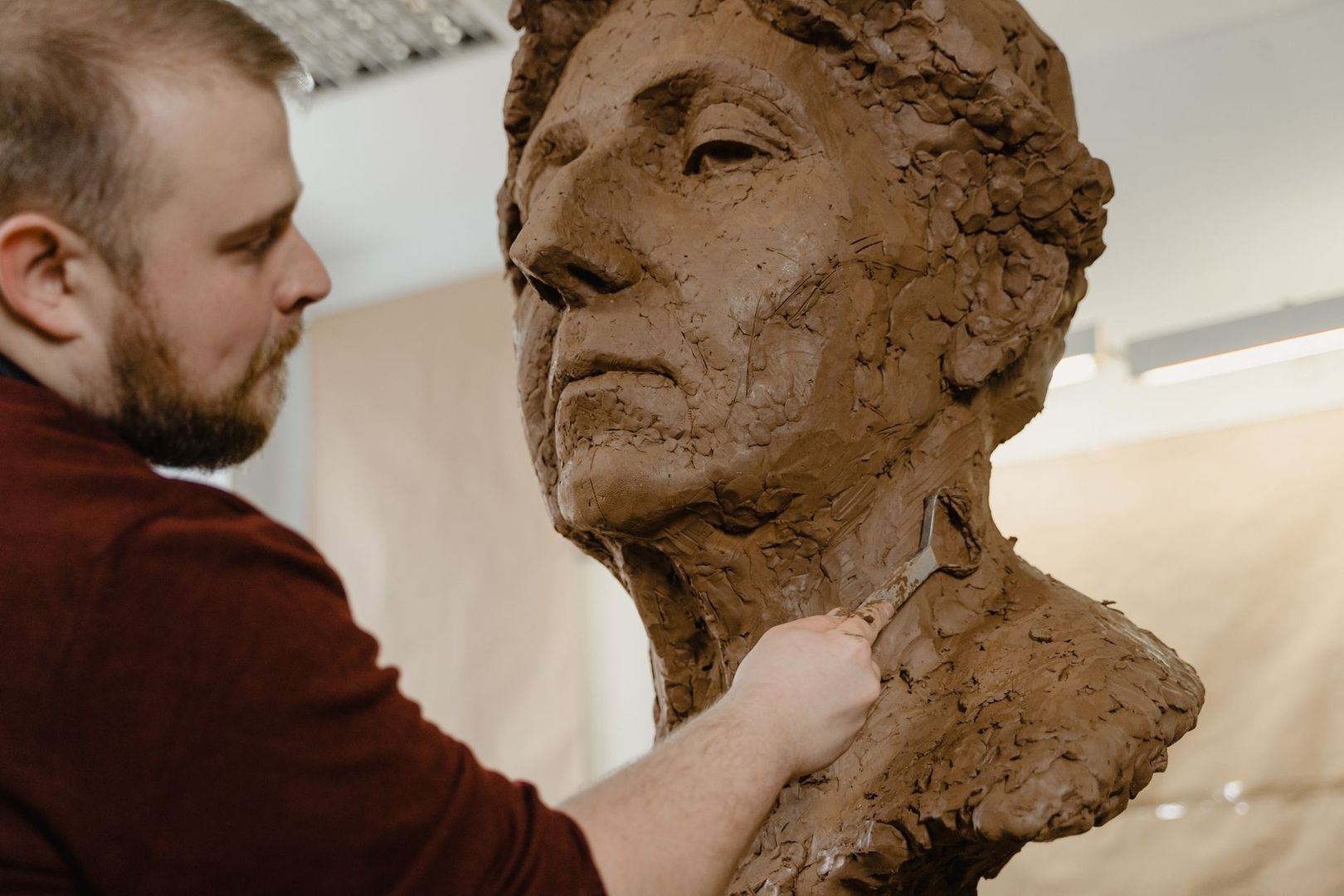
- Structural armature establishes the skeleton, frame, joints, and attachment points. Metal rods, wire, fiberglass, or reinforced resin may provide the necessary support.
- Mechanical movement adds cables, servos, pneumatic bladders, hydraulic systems, or puppeteering controls for jaws, fingers, breathing, and head motion.
- Body volume is built through foam, flexible rubber, padding, and sculpted forms that define muscle, bone, and mechanical housings.
- Biological skin is layered over the structure using silicone, latex, polyurethane, translucent membranes, or thin appliances designed to wrinkle and stretch.
- Surface history completes the illusion through paint, grime, corrosion, slime, blood, lubricants, and carefully controlled highlights.
Suit performers faced a separate ordeal. Steel-reinforced prosthetics, rigid exoskeletal sections, and heavy helmets could turn a short movement into an athletic trial. Vision might be limited to a narrow slit. Heat could accumulate inside the costume. The performer had to communicate predatory intelligence through posture and rhythm when facial expression was unavailable. This is why the most successful creature suits seem to possess a distinct physical grammar. A slow head turn, a sudden pause, or a slight articulation of the fingers can suggest more consciousness than a barrage of motion.
Creature actors and puppeteers also had to coordinate with the camera, lighting, sound, and effects teams. Every practical component created consequences. A mechanism could make noise that interfered with dialogue. A wet surface could reflect a lamp too brightly. A silicone membrane might tear after repeated takes. These limitations were not merely obstacles. They forced filmmakers to stage encounters with patience and precision, allowing darkness, framing, and partial revelation to preserve the creature’s mystery.
That physicality remains visible even in an era of advanced digital imaging. Early computer graphics could generate motion and scale, but they often struggled to reproduce the irregular response of real material under light. A practical surface bends, absorbs, wrinkles, sweats, and casts an independent shadow. It occupies the same air as the actor facing it. Contemporary digital effects frequently add scanned textures, simulated grime, digital fluids, and virtual camera shake in an attempt to recover that lost weight. The enduring lesson is not that practical effects are automatically superior, but that material presence carries dramatic information. The viewer senses when a monster has mass, friction, temperature, and a body that could physically cross the room.
Why the Machine Beneath the Flesh Still Haunts Modern Cinema
The visual footprint of 1980s biomechanical horror remains embedded in contemporary science fiction and body horror. Modern creatures may be rendered through digital sculpting, performance capture, and procedural animation, yet their most memorable designs still rely on the old covenant between flesh and mechanism. Films continue to return to ribbed armor, exposed tubing, surgical openings, insectile joints, and bodies that appear manufactured by an intelligence indifferent to human comfort. Even when the image is entirely digital, it often seeks the grime, weight, and tactile contradiction first established by practical workshops.
The machine beneath the flesh endures because it gives technological anxiety a face without making it simple. The monster is not merely an evil machine, nor is it only a wounded organism. It is a threshold creature, caught between appetite and function, birth and assembly, sensation and control. That is why biomechanical horror still feels so intimate. It reminds the viewer that vulnerability is not located somewhere beyond the body. It is inside the body, waiting at the point where living tissue meets the systems designed to repair, improve, regulate, or replace it.